
Introduction: Transforming Introspection into Actionable Growth
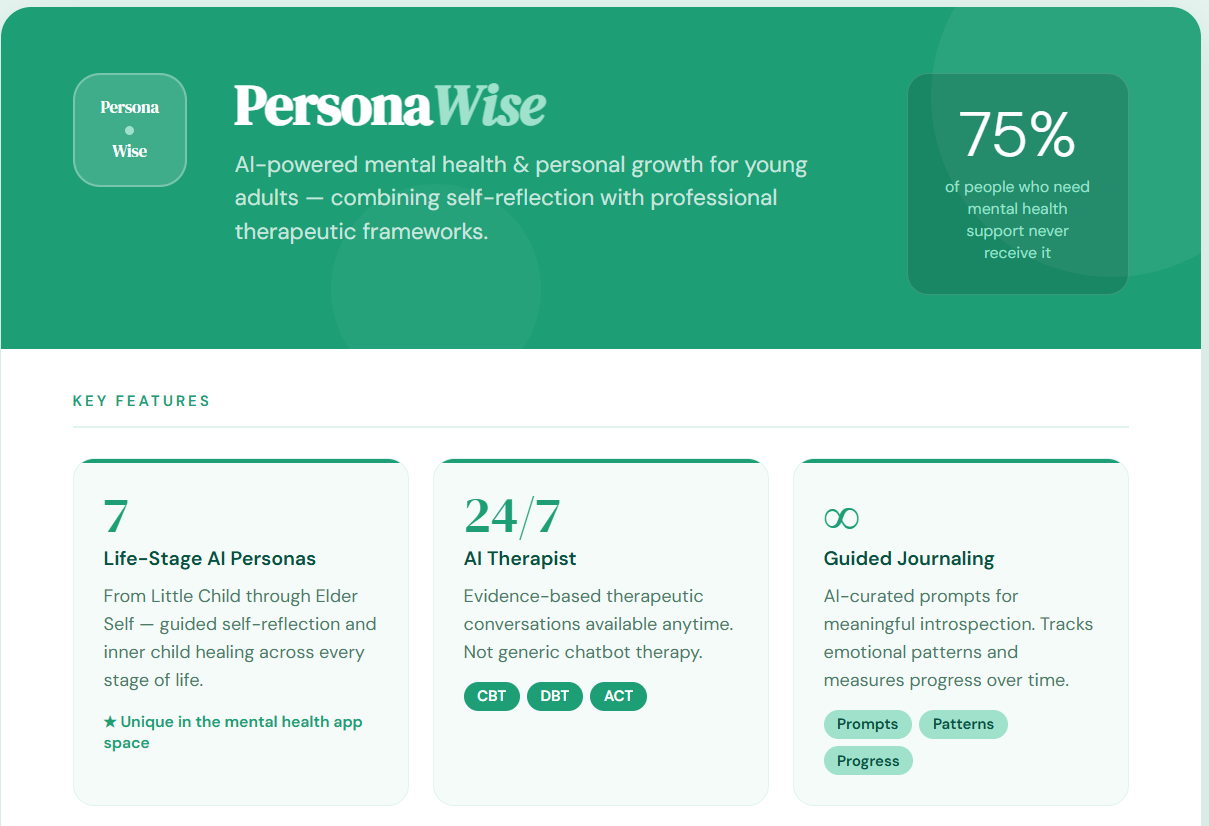
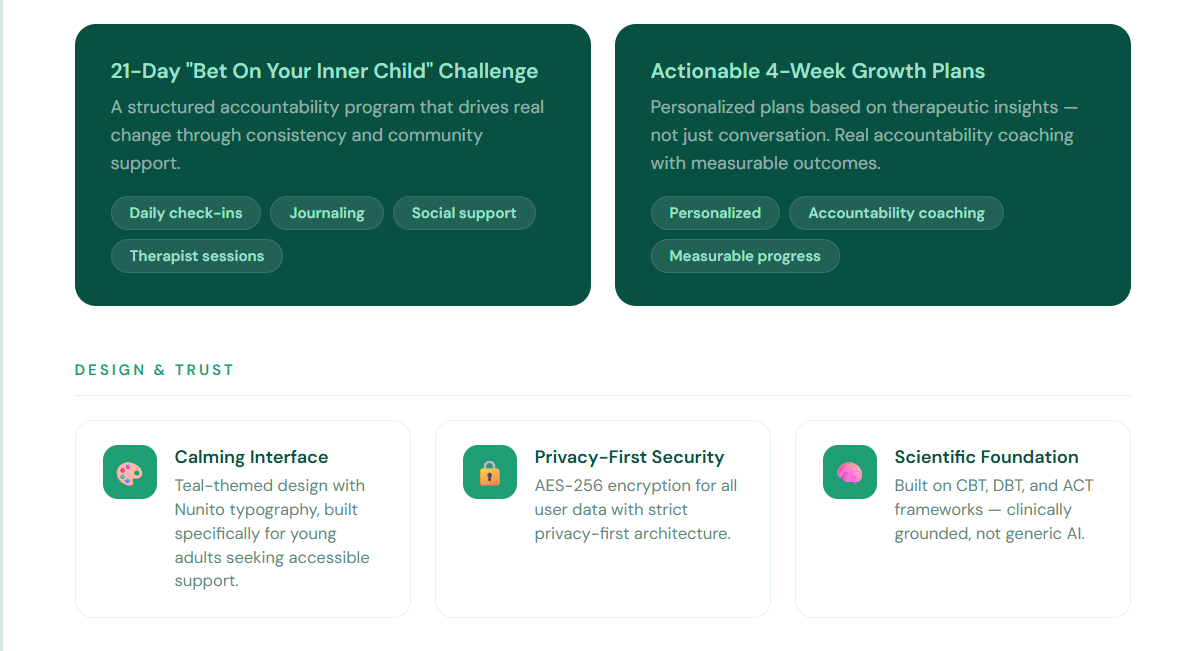
PersonaWise AI-powered Self-Reflection App is a mental health and personal growth app designed to help young adults explore self-reflection in a structured, supportive way. Built around the idea of “transforming introspection into actionable growth,” the platform offers private persona-based conversations, guided journaling, weekly action plans, and multi-tier support across iPhone, Android, and web. Its website highlights features such as discovering inner personas, an AI wellness guide, a 21-day inner child program, and progress-oriented plans and tools.
Created by Cherish Lytle, founder of PersonaWise and Lytle Solutions LLC, the app was shaped by both personal experience and a wider social need for accessible emotional support. As Cherish explains, the mission is to make healing and personal growth more available, practical, and supportive for people who may not have easy access to traditional therapy. PersonaWise also includes a clear crisis disclaimer, reinforcing that it is not a substitute for professional medical advice, diagnosis, or treatment.
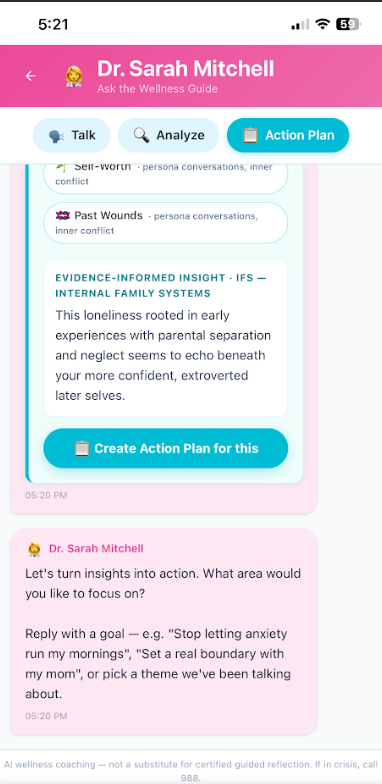
In this interview, we explore the thinking behind PersonaWise, the design principles behind the experience, and how the app aligns with wellbeing science, user-centred design, and positive psychology. We also look at how its approach reflects key ideas from the PERMA model, alongside a UX perspective on simplicity, clarity, and emotional safety.
Q&A: Getting to know PersonaWise with Cherish Lytle
1. What inspired you to create PersonaWise — was it a personal experience, an identified industry gap, or a broader social challenge?
Absolutely a mix of all three — though it started deeply personal. I’m a single mom who, after losing nearly everything, spent seven years trying to heal alone because I simply couldn’t afford therapy. Every time I went looking, it was $150, $200, $300 a session. So I did it the hard way. PersonaWise is the support I needed and couldn’t reach — and along the way, I realized how many young adults are stuck in that same gap: wanting to grow, but lacking the validation and accountability to actually get there.
2. What is the core vision and mission of PersonaWise, and what long-term impact do you hope it will have on users and communities?
Our vision is a world where anyone can confidently navigate their mental health journey — without it being a luxury. I built this believing that healing shouldn’t require $300 you don’t have. Our mission is to empower people through validated introspection and professional coaching. Long-term, I hope we build a community where personal growth is genuinely accessible and deeply supported.
3. As the platform includes multiple features and layers of interaction, how do you plan to ensure users are guided clearly through the experience without feeling overwhelmed?
We’ve designed PersonaWise with simplicity at its core. By breaking the journey into easy-to-follow steps and using friendly, intuitive interfaces, users can navigate effortlessly. Think of it like having a gentle guide by your side.
4. Do you envision PersonaWise evolving into a more personalised, journey-based platform where users define their goals and receive tailored guidance accordingly?
Absolutely! We aim to continually enhance personalization so users can set and achieve their personal goals with tailored guidance. We believe a personalized journey makes self-growth both meaningful and enjoyable.
5. Could you explain how the “Chat with Personas” feature works and its intended purpose for users?
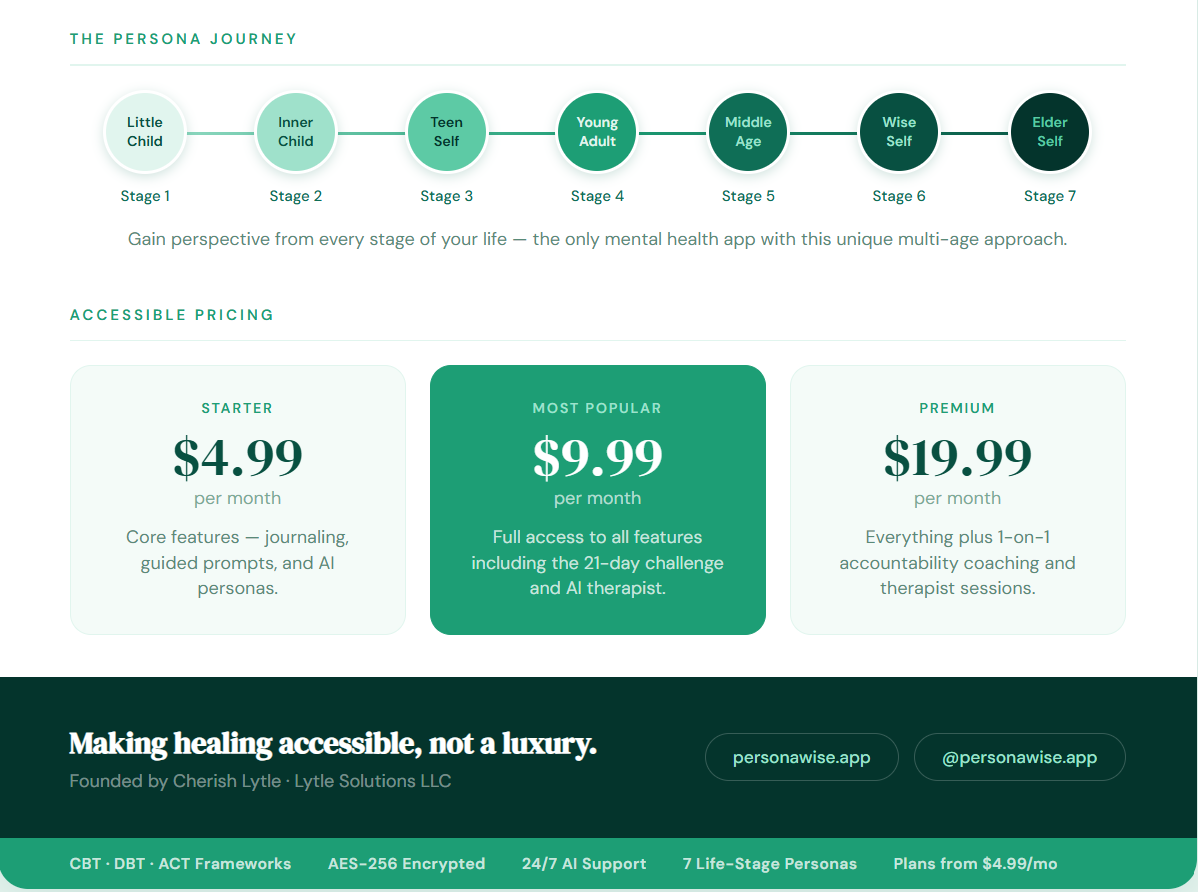
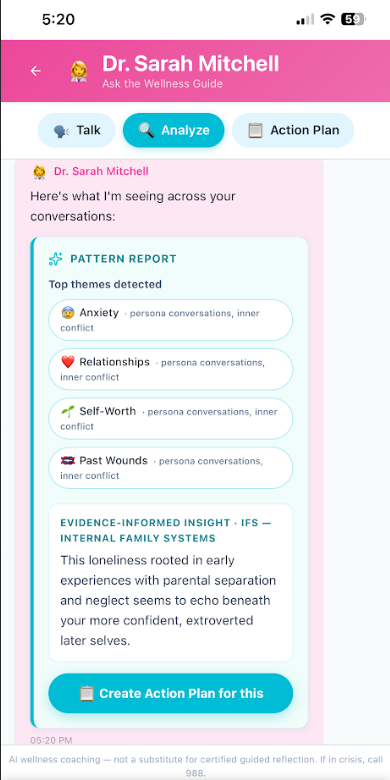
Certainly! Users engage with personas from seven pivotal life stages by answering guided questions about memories and emotions. It’s all about inner-child healing — reflecting and gaining insights with the assurance that the advice is validated by therapists.
6. Given that users may interact with personas representing sensitive age groups or perspectives, how do you ensure that responses remain safe, accurate, and responsible?
Every interaction passes through a therapeutic validation layer trained on CBT, DBT, and ACT, ensuring safety and accuracy. Plus, licensed therapists review and validate the approach to maintain high standards of responsibility and care.
7. What safeguards or ethical frameworks have you implemented to minimise misinformation, bias, or potentially harmful guidance within AI-driven interactions?
We’ve integrated crisis detection and a robust ethical framework to minimize bias and misinformation. Our AI is constantly learning and is monitored by professionals to ensure it provides safe, supportive guidance at all times.
8. Who do you consider to be the primary target users of PersonaWise, and what specific needs does the platform aim to address for them?
We’re focused on young adults seeking mental health support and personal development — and honestly, I’m one of my own target users, building for people like my past self. PersonaWise addresses their need for validated self-reflection and professional guidance to turn insights into actionable growth.
9. How would you describe your vision for the user experience and overall design philosophy behind PersonaWise?
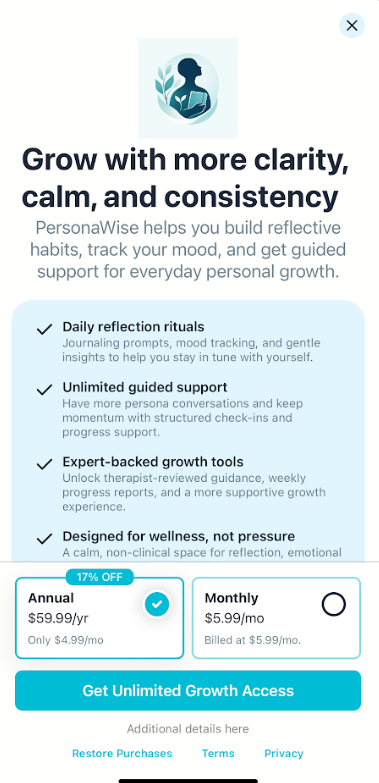
Our vision is to create a warm, inviting space where users feel encouraged to explore and grow. The design is rooted in clarity and empathy, ensuring people feel supported without being overwhelmed by technical complexity.
10. What principles guided your approach to designing the interface and user journey within PersonaWise?
Simplicity, empathy, and accessibility are our guiding stars. We designed with the user in mind, ensuring every interaction is straightforward and enriching, while keeping the focus on mental well-being.
11. Could you walk us through the thinking behind the user experience design and how you aimed to balance simplicity with functionality?
We prioritized a clean interface that lets users focus on their journey without distractions. Functionality is seamlessly integrated, providing all the necessary tools for introspection and growth without complicating the experience.
12. What was your intended design philosophy when structuring the PersonaWise platform and its user flow?
Our design philosophy is user-centric — ensuring every step feels natural and empowering. We connect the dots between introspection and professional insights, making the process intuitive and impactful.
13. How does PersonaWise differentiate itself from other AI-driven conversational or guidance platforms in an increasingly competitive market?
Unlike others, PersonaWise combines introspection with a clinical validation layer and therapist oversight. We’re not just journaling or an AI chatbot — we’re a comprehensive system of support that ensures accountability and real personal growth.
14. What has been the most challenging aspect of building PersonaWise to date — technology, ethics, user adoption, or another factor?
Balancing technological innovation with ethical considerations has been the biggest challenge. Ensuring our AI is both advanced and responsible takes constant diligence and close collaboration with mental health professionals.
15. Does the platform draw any inspiration from positive psychology frameworks such as the PERMA model? If so, how are these principles reflected in the user experience and overall mission of the app?
Yes, definitely! We embrace Meaning, Relationships, and Accomplishment by empowering users to find purpose, connect deeply with their inner selves, and celebrate personal milestones. It’s all about fostering a fulfilling journey of growth.
16. Finally, what future features or developments can users expect from PersonaWise in the coming years?
We’re excited about enhancing personalization and expanding our therapeutic insights. Users can look forward to more interactive features, deeper engagement options, and broader support tools to enrich their mental health journey.
Key Insights: How PersonaWise Reflects PERMA and Strong UX Design
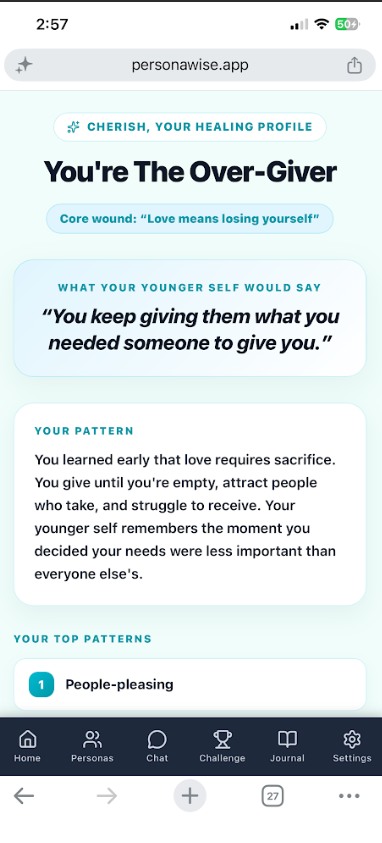
PersonaWise AI-Powered Self-Reflection App aligns naturally with the PERMA model through its focus on reflection, progress, connection, and meaningful self-understanding. The app’s structure — from inner personas to journaling, weekly action plans, and the 21-day inner child journey — supports wellbeing in a practical, repeatable way. Its emphasis on self-reflection, pattern tracking, and guided growth also fits the broader positive psychology idea that wellbeing is built through intentional habits, not just positive thinking.
Positive Emotion
PersonaWise supports positive emotion by helping users slow down, reflect, and recognise progress. Rather than pushing users toward perfection, it creates space for self-awareness, reassurance, and encouragement.
Engagement
The app’s persona-based conversations and guided prompts invite active participation. This kind of interaction keeps users involved in the process, rather than making them passive recipients of advice.
Relationships
Although the experience is digital, it still supports relational wellbeing through compassionate, validating dialogue. The idea of exploring different parts of the self can also deepen the relationship users have with themselves.
Meaning
PersonaWise gives users a sense that their experiences matter and that growth can be intentional. Its mission and language emphasise purpose, healing, and self-understanding, which are central to meaning.
Accomplishment
From weekly plans to structured programs and progress tracking, the app turns reflection into action. That creates a sense of achievement that can help users feel they are moving forward measurably.
From a UX perspective, PersonaWise is strongest when it keeps the experience calm, simple, and emotionally safe. The site’s clear positioning, clean subscription structure, and gentle onboarding language help reduce friction for new users. The “welcome back” login flow, straightforward plan tiers, and plainspoken safety disclaimer all reinforce trust and usability.
The design direction also supports the app’s audience well. For young adults seeking personal growth support, the most effective UX is often one that feels non-judgmental, easy to navigate, and emotionally reassuring. PersonaWise appears to prioritise that balance by combining structure with warmth, which is especially important in a mental health-adjacent product.
Conclusion
PersonaWise offers a thoughtful example of how AI can be used to support self-reflection, guided growth, and emotional clarity in a more accessible way. By combining personalised persona-based interaction, structured journaling, and wellness-oriented guidance, the app creates a pathway that feels both practical and supportive. Its values also resonate with positive psychology principles, especially around meaning, relationships, engagement, and accomplishment.
Cherish Lytle’s vision is rooted in lived experience, and that gives PersonaWise a strong sense of purpose. As the platform grows, it will be exciting to see how it continues to balance therapeutic responsibility, user-friendly design, and meaningful personal development.