

Introduction
Digital therapeutics for mental health are defined as computer-generated medical interventions for the management and treatment of various mental disorders such as anxiety, mood, and substance abuse disorders, among others. In other words, the developed digital therapeutics solution has undergone several tests for approval by regulatory agencies such as the FDA and CE and has been widely used by industry professionals.
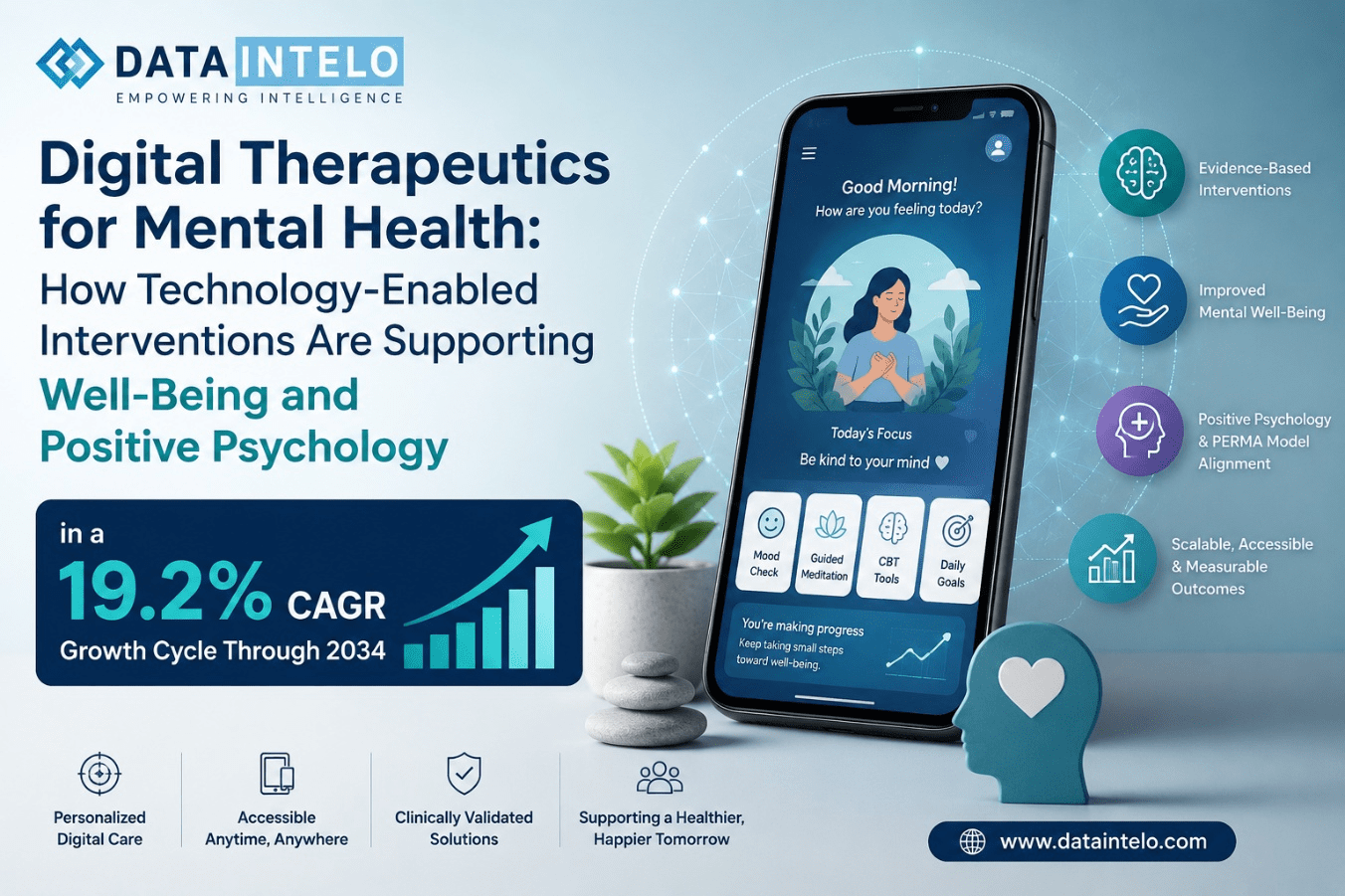
According to DataIntelo, the global market of digital therapeutics for mental health in the industry is forecasted to have an astonishing growth rate in the coming years. In 2025, the global market for digital therapeutics was estimated at USD 9.35 billion and could reach USD 45.1 billion by 2034, growing at a CAGR of 19.2% during the forecast period.
The main driving force behind the growth of digital therapeutics is the increasingly pressing need for evidence-based solutions with the introduction of advanced technologies such as artificial intelligence.
The market’s expansion is fueled by several factors:
- Increasing Burden of Mental Illness: The worldwide occurrence of issues such as anxiety, depression, and stress has increased significantly throughout the world after the pandemic, putting urgent importance on the need for scalable solutions.
- Advancement of Technology: Advances in artificial intelligence such as chatbots, as well as individualized medicine and mobile health platforms, help in adaptability and promptness of interventions like cognitive behavioral therapy and other proven methods.
- Support from Medicaid and Regulation: Legislative changes by regulators, including FDA SaMD and the EU Digital Health Data Access Program, have stimulated the implementation and existence of digital healthcare for patients in the market.
- Adoption of Positive Psychology: The use of positive psychology in digital healthcare is increasing with the application of frameworks such as PERMA, which plays a significant role in enhancing the overall state and well-being of patients.
Technology-Enabled Interventions and Positive Psychology
Digital treatments for mental health are designed not only for the management of symptoms but also for holistic well-being and good psychological functioning. Evidence from studies that are based on the PERMA model has established that interventions lead to significant improvements in subjective well-being, life satisfaction, and positive affect with small to medium effect sizes, as shown by different meta-analyses.
Examples of PERMA-Aligned Digital Interventions:
- Mobile PERMA Initiatives: Technologies that utilize smartphone applications for interventions that utilize components from all five PERMA domains have been effective in improving psychological well-being among university students and other target groups.
- WeChat PERMA Initiatives: Digital programs that employ messaging apps for purposes of support have been efficient in helping with decreased levels of grief, boosting post-traumatic growth, and improving well-being among certain populations.
- Future of AI bots in Positive Psychology: Generative AI technologies are currently being pilot-tested to determine their efficiency in delivering tailored positive psychology materials such as gratitude practices, strengths identification exercises, and activities involving meaning-making.
This kind of technology-based strategy represents a greater movement that opts for prevention-focused mental health services founded on a strength-based philosophy involving development, resilience, and happiness beyond simple illness prevention.
Digital Therapeutics for Mental Health – Regional Outlook
| Region | Market Position / Share (2025) | Growth Outlook |
| North America | Largest regional market (around 40–45% share) | Mature ecosystem, strong reimbursement pathways, high adoption of prescription digital therapeutics and AI-driven mental health apps |
| Europe | Significant and fast-growing share | Driven by EU digital health frameworks, national reimbursement schemes (e.g., Germany’s DiGA), and cross-border data initiatives |
| Asia Pacific | Fastest-growing region | Rapid smartphone penetration, expanding tele-mental health services, government digital health programs, and rising awareness of mental health |
| Rest of World (Latin America, Middle East & Africa) | Smaller but accelerating | Early-stage adoption with growing investment in telehealth, mobile mental health solutions, and public–private partnerships |
Clinical Evidence and Real-World Impact
Various studies, controlled trials, and meta-analyses have established the impact of digital technology on clinical results – it’s proven effective in improving clinical outcomes.
- Mental Health: Computerized cognitive behavioral therapy using artificial intelligence is working just as effectively for patients with mild to moderate depression as it does in face-to-face interactions.
- Psychosocial Functioning: The outcomes of the patients exposed to digital cognitive behavioral therapy indicate very promising results for their level of substance abuse and psychosocial functioning.
- Workplace and Youth Well-Being: It’s been shown that patients who use the self-help digital treatment technologies can prevent burnout, cope with stress, and feel better overall.
Future Outlook and Strategic Opportunities
The mental health digital therapeutics market is expected to continue growing through 2035 as it is expected to expand rapidly due to the emergence of prescribed offerings, code reimbursements, and developed payer systems.
Key opportunities include:
- Hybrid systems for medical assistance: Combining traditional care methods and technology to maximize motivation and therapy results.
- Tailored care models aided by AI: Using patients’ information, which can be obtained thanks to wearables and applications, to create personalised therapies.
- Positive psychology integration: Using PERMA modules and wellness data points through the digital platform for holistic mental health and resilience improvement.
- Global reach: Implementing well-researched digital therapeutics in underdeveloped regions with limited physicians and access. For more details on the market, including its segmentation and competitive landscape, visit the comprehensive.
If you want a more thorough understanding of the market, including information on segmentation, competition, and regional outlook, refer to the complete report.
Reference: https://dataintelo.com/report/digital-therapeutics-market