
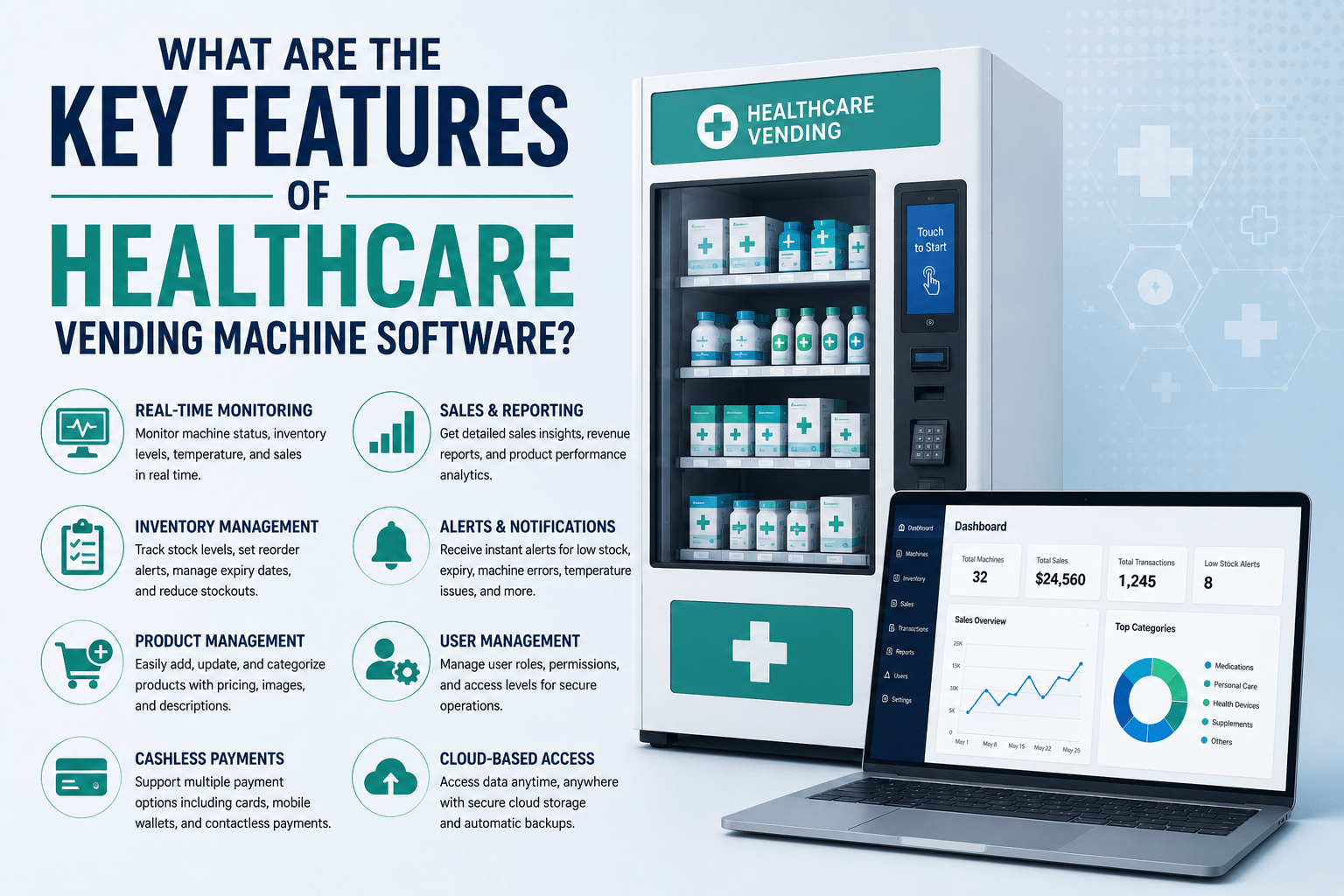

If you go into most hospitals these days and you will find vending machines that are not just selling random snacks. They are actually stocked with supplies that staff or even some people waiting in the lobby need to do their jobs.
Basically, the idea is simple enough. People shouldn’t have to send someone to a stockroom and wait. In these vending machines, a nurse or technician just walks up and authenticates who they are. Then they just take what they need and gets back to work. Boom, it’s that easy.
It works well when the software behind the machine is built properly. When it is not, you end up with stockouts nobody caught, supplies going to people who should not have them, and administrators with no clear picture of what is actually being used across the facility.
So the machine is almost beside the point. The software is where the real difference is made.
Tracking What Is Actually in the Machine
The most basic thing healthcare vending software needs to do is know what is in the machine at any given moment and alert someone when stock is getting low.
This sounds simple but it matters enormously in a clinical environment. Running out of gloves or syringes is not the same kind of thing as running out of coffee. The software should be tracking every single dispense. It should also:
- Update stock counts in real time
- Flag items that are approaching the reorder threshold before they actually run out
The better systems also give you visibility into which products are moving fast and which are barely being touched. That information alone changes how purchasing decisions get made. This is because now, you are buying based on actual usage data.
Controlling Who Can Access What
Not everything in a healthcare vending machine should be available to everyone. Some supplies are department-specific. Some are controlled medications. Some are expensive items that need to be tracked carefully.
User access controls handle this by requiring staff to authenticate before the machine will dispense anything. That might be a PIN, an ID card, a fingerprint, or credentials tied to their existing staff account. Once they are authenticated, they only see and can access what they are permitted to take.
This also creates a full record of who took what and when, which matters for compliance, for spotting unusual usage patterns, and for those moments when something goes missing and there needs to be a way to find out what happened.
Being Able to Manage Everything Remotely
Healthcare facilities are not small. A large hospital network might have vending units across multiple buildings or even multiple sites. Nobody wants to physically walk to each machine to check whether if it is working properly or running low on supplies.
Remote monitoring lets administrators see the status of every machine from one place. Whether it is online, what the stock levels look like, whether there are any errors being logged. If something is wrong, the system sends an alert rather than waiting for a staff member to notice in person. With good vending machine software development, you get timely updates.
Software updates and configuration changes can also usually be pushed remotely, which saves a significant amount of time when you are managing more than a handful of machines.
Reporting That Actually Gets Used
Data from these machines is genuinely useful if it is presented in a way that makes sense. Which supplies are consumed fastest and in which departments? How often is each machine being restocked? Are there patterns in usage that suggest a particular unit needs to be relocated or restocked more frequently?
Good vending software surfaces this without administrators having to dig through raw logs. Regular reports that show consumption trends, restocking frequency, and user activity give the people managing these systems enough information to make better decisions about ordering, placement, and access permissions.
It is also useful for spotting things that look off. If one department’s usage of a particular item suddenly spikes, that is worth knowing about.
Keeping Transactions Secure
Any system that handles controlled medications or tracks employee activity needs to take security seriously. That means encrypting data as it moves between the machine and connected systems, keeping a complete and tamper-evident log of every interaction, and making sure authentication cannot be easily bypassed.
It also means meeting whatever regulatory requirements apply to the facility. Healthcare environments are heavily regulated for good reason, and vending machine software that handles medications or sensitive supplies needs to be built with compliance in mind, not treated as an afterthought.
Temperature Monitoring for Sensitive Supplies
Some of what goes into these machines needs to be kept within a certain temperature range. Vaccines and certain medications lose effectiveness if storage conditions fall outside acceptable limits, and there is no visible sign that this has happened until someone checks.
Software that monitors internal temperature continuously and sends an alert the moment something goes outside the acceptable range gives administrators a chance to respond before anything is compromised. It also creates a documented record of storage conditions over time, which supports quality assurance and compliance reporting.
Fitting Into Systems the Facility Already Uses
Most hospitals already have inventory management systems and employee authentication tools. A vending machine that operates as a completely separate island creates more work because information has to be manually reconciled across systems.
Vending software that integrates with what already exists means inventory updates flow automatically to the right place, and employee credentials from existing systems work at the machine without needing a separate setup.
It is the difference between adding something that fits into how the facility already operates and adding something that creates its own parallel process that someone has to manage separately.
Supporting Healthcare Staff Well-being
Healthcare vending machine software does more than improve inventory management. It also helps reduce everyday frustrations for nurses, technicians, and other frontline staff. When essential supplies are available exactly when they are needed, clinicians spend less time searching for equipment and more time focusing on patient care.
From a positive psychology perspective, reducing unnecessary workplace obstacles supports employee well-being. Reliable systems help minimise stress, improve confidence in daily workflows, and allow healthcare professionals to concentrate on meaningful clinical work rather than administrative tasks.
Although vending software cannot eliminate workplace pressures, it can contribute to a more supportive working environment where staff feel equipped to perform their roles effectively.
| Software Feature | Positive Psychology (PERMA) Connection |
|---|---|
| Real-time inventory | Reduces frustration and anxiety (Positive Emotion) |
| Fast access to supplies | Enables clinicians to remain focused on patient care (Engagement) |
| User authentication and accountability | Builds trust and responsibility within teams (Relationships) |
| Reporting and analytics | Helps organisations improve systems and celebrate improvements (Accomplishment) |
| Reliable supply availability | Allows staff to focus on meaningful work rather than logistical problems (Meaning) |
Why the Software Matters More Than the Machine
Two vending units sitting side by side in a hospital corridor can look identical. What determines whether they actually work well for the staff using them and the administrators managing them is entirely down to what is running behind the screen.
The right software keeps stock accurate, access controlled, data secure, and the people responsible for the system informed without having to be physically present to find out what is going on. For a healthcare environment where supply availability directly affects patient care, that reliability is not a nice-to-have.
Ultimately, healthcare vending machine software is not simply about inventory control. Ensuring essential supplies are available when and where clinicians need them, it helps create smoother workflows, reduces avoidable stress, and supports healthcare professionals in delivering safe, high-quality patient care. Technology that removes unnecessary barriers allows clinicians to focus on what matters most: the people they care for.