

Burnout does not usually happen in one day. It can build up when work stays stressful for a long time and there is little time to rest. Over time, a person may feel tired, lose interest in work, or start to feel that the work has no purpose. Positive psychology can help by focusing on strengths, good relationships, healthy ways to cope, and a sense of purpose. But personal habits are only part of the solution, manageable workload, clear expectations, regular breaks, enough sleep, and supportive managers also play a big role in preventing burnout.
What Burnout Is and How It Develops
Burnout is linked specifically to work. The WHO describes burnout as an occupational phenomenon that develops from chronic workplace stress that has not been successfully managed. It has three main dimensions: exhaustion, growing mental distance or cynicism toward work, and reduced professional effectiveness.
How Stress Differs From Burnout
The difference between stress and burnout becomes easier to understand when looking at how long they last. Stress can cause worry, tension, or tiredness during a busy or difficult period. It may improve when the pressure goes down and there is enough time to rest. Burnout tends to last longer. It can lead to constant exhaustion, feeling disconnected from work, and difficulty doing the job effectively.
Common warning signs include:
- Feeling tired at work most days.
- Getting angry or negative easily.
- Finding it hard to focus.
- Enjoying work less than before.
- Still feeling tired after rest.
Why Pressure Becomes a Longer-Term Problem
Chronic workplace stress can build up when heavy workloads continue for a long time without enough time, staff, support, or control over the work. A simple way to understand this is to look at what takes energy and what helps restore it. Tight deadlines, difficult conversations, unclear duties, and constant interruptions can leave people feeling worn out. Having some control over work, fair treatment, helpful feedback, and supportive coworkers can make stressful periods easier to manage. Feeling tired does not always mean burnout. A person may feel worn out after a busy week and feel better after getting enough sleep or taking a break. Burnout becomes more concerning when exhaustion, detachment, or poor work performance continues for a long time and starts to affect everyday life. At that point, taking another productivity shortcut is unlikely to solve the problem.
How Positive Psychology Can Support Burnout Prevention
Positive psychology looks at what helps people feel and function better in daily life. It does not mean pushing away sadness, worry, or other difficult feelings. Instead, it looks at things such as personal strengths, hope, meaningful activities, good relationships, and positive feelings that can make difficult times easier to handle.
Building Resources Rather Than Denying Problems
Traditional stress management usually focuses on dealing with stress as it happens. Rest, relaxation, and better time management can all help. Positive psychology interventions take a slightly different approach. They also help build useful habits and personal strengths that can make stressful situations easier to handle before they happen, while they are happening, and afterward.
For example, different practices may help in different ways:
- Mindful attention can make stress reactions easier to notice.
- Strengths use can restore a sense of capability.
- Gratitude can bring overlooked support and progress back into view.
- Meaningful goals can reconnect routine work with a useful purpose.
- Constructive relationships can provide emotional and practical help.
These methods can help build psychological resilience, which means being able to deal with difficult situations and slowly get back to normal. It does not mean ignoring problems or acting as if they do not matter.
Research shows that positive psychology interventions may improve well-being, but the results are not always the same. The outcome can depend on the type of activity, where it is used, and how the research was carried out. For this reason, these methods are best used as one part of a wider plan for workplace well-being. They should not be treated as a guaranteed way to prevent or fix burnout.
A Support, Not a Cure for Poor Working Conditions
The way positive psychology helps with burnout depends on what is causing the stress. For example, taking a few minutes to reflect before a difficult meeting may help someone stay calm. But it will not solve problems such as too few staff, unfair treatment, harassment, or an unrealistic amount of work.
Preventing burnout requires more than personal coping skills. Employees can learn to notice early signs of stress and respond in healthier ways. At the same time, managers need to look at workloads, deadlines, staffing, communication, freedom to make decisions, and time for rest. Looking at both the person and the workplace gives a better chance of preventing burnout.
Seven Practical Techniques That Support Daily Recovery
Core Daily Practices
The following practices are short enough to fit into an ordinary workday. Each serves a different purpose, so the most useful option depends on the type of pressure or warning sign involved.
For a deeper understanding of stress, structured stress management training can be helpful. It covers how stress affects daily life and introduces practical ways to handle it.
1. Mindful Attention
Mindfulness can support burnout prevention by helping people notice their thoughts, emotions, and physical sensations as they arise, without immediately reacting to or judging them. Even taking a short pause can help notice signs of tension and respond more calmly. Studies of mindfulness at work have found that it may help reduce feelings of stress. However, the results are not the same in every study, and different mindfulness programs can have different effects.
2. Gratitude With Detail
Effective gratitude exercises for stress go beyond listing pleasant events. A person can record one helpful event, why it mattered, and what made it possible.
3. Realistic Reframing
Reframing is a useful emotional regulation technique. It means looking at a difficult situation from a more balanced point of view. For example, instead of thinking, “One mistake ruined everything,” a person might think, “The mistake needs to be fixed, but it does not take away from all the work that has already been done.”
4. Intentional Strengths Use
Strengths-based interventions mean using personal strengths when dealing with work or everyday problems. These strengths can include curiosity, patience, fairness, or kindness. For example, when the same problem keeps coming up, a curious person may try to find out what is causing it instead of simply feeling that another mistake has been made.
5. Self-Compassion
Self-compassion in stress management means giving oneself some understanding when things do not go as planned. Mistakes are part of life, so there is no need to dwell on guilt or shame. It is better to accept what happened, correct it, and take the lesson forward.
6. Progress Recognition
A short “done list” records the work that has already been completed. This can be helpful when new tasks keep coming in and make completed work easy to overlook.
Seeing what has been finished can give a clearer picture of the work and effort involved.
7. Supportive Connection
A quick chat with a trusted colleague can help someone feel less alone and make it easier to ask for practical help. When workplace issues are serious, however, this kind of support should be used alongside formal workplace support, not instead of it.
Practical Case Study: A Simple Gratitude Practice
One study with nurses looked at a simple exercise called “three good things.” The nurses wrote down three positive things that happened during their day. After six months, those who used the exercise reported feeling less exhausted. The results were especially good for nurses who did it about twice a week.
Small positive habits can help people notice the good things they have done, even during a difficult time. But gratitude alone will not solve problems such as too much work, poor communication, or ongoing pressure at work.
Try it: At the end of the day, write down three things that went well, such as completing a difficult task, receiving support, or making progress on an important goal.
Using the PERMA Model to Support Workplace Well-Being
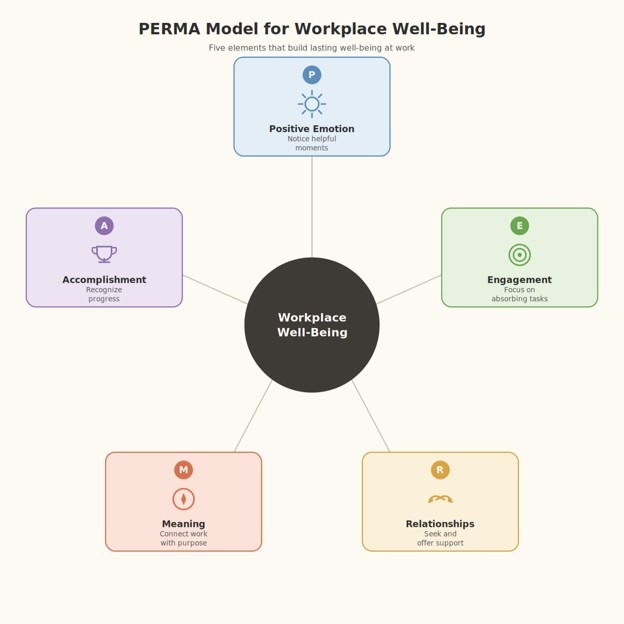
The PERMA model for well-being looks at five parts of a healthy, fulfilling life: positive emotions, engagement, relationships, meaning, and accomplishment. Looking at these areas can show what is going well and where more support may be needed.
Positive Emotion and Engagement
Gratitude, hope, and calm can make a stressful day easier to handle. Interest can also help a person stay focused, especially when the task feels useful. Having some quiet time during the day makes it easier to concentrate. Frequent messages, calls, and other distractions can make it harder to stay focused.
Relationships and Meaning
Having a colleague to talk to can help when work gets difficult. Coworkers can also help with tasks when the workload becomes too much. Work can feel more meaningful when it helps a client, supports the team, or keeps things running well. However, even meaningful work can become stressful when there is too much to do.
Accomplishment
Feeling good about progress can come from reaching small goals. Clear goals, small steps, and useful feedback can help.
These five areas can be looked at through a few simple questions:
- What was a good moment this week?
- Which task kept the focus steady?
- Was help available when it was needed?
- Which task felt meaningful?
- What progress can be recognized?
These questions can show what is helping people feel better at work and where changes may be needed. This approach also relates to the Job Demands-Resources framework, which looks at the balance between work demands and the resources available to handle them.
Matching Techniques to Burnout Warning Signs
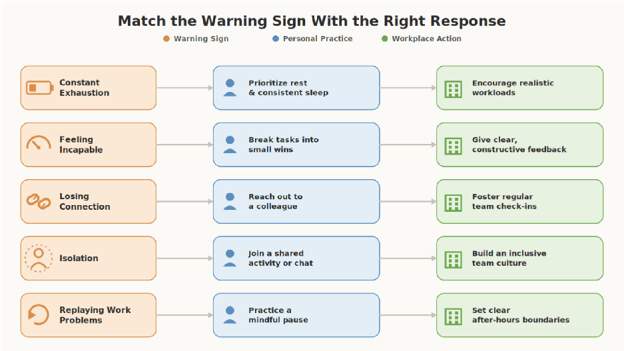
Using positive psychology-based stress management techniques at random may produce little change. A better approach is to identify the warning sign, consider its likely cause, and then select an appropriate personal and workplace response.
| Warning sign | Personal practice | Workplace response |
| Replaying problems after work | Mindful breathing and written reframing | Clarify unfinished priorities before leaving |
| Feeling incapable | Record progress and apply a personal strength | Request specific feedback and clearer expectations |
| Losing connection with work | Link one task to a meaningful outcome | Review role fit and remove unnecessary work |
| Becoming isolated | Schedule a supportive check-in | Improve team access and psychological safety |
| Constant exhaustion | Protect breaks and recovery time | Reduce, delay, or redistribute demands |
Start With One Clear Pattern
A project coordinator may receive several urgent tasks from different managers in a single day. When this happens often, lunch is skipped, working hours increase, and even a small delay can feel like a personal failure. Positive psychology stress management may help the person pause, look at the situation more fairly, and keep a simple record of completed work. This makes it easier to notice rising stress without blaming oneself.
A heavy workload cannot be managed through personal habits alone. Work needs to be shared fairly, urgent tasks need to be sorted out, and deadlines should be realistic. When there is too much work, burnout prevention techniques should also look at how tasks are planned and divided.
The same logic applies to other cases. If the main problem is isolation, gratitude alone is unlikely to be enough. If the problem is unclear expectations, breathing exercises will not create role clarity. A technique is useful when it fits the need and forms part of a wider response.
4-Week Plan: Building Sustainable Habits
It can be hard to change everything at once. Start with one habit and add another the next week. After a month, a few simple habits can be part of the routine.
Week 1: Notice Stress Patterns
Notice when stress starts to build then think about what is causing it, when energy feels low, and what makes it hard to relax after work. Try one small thing each day, like taking a few slow breaths or sitting quietly for a while.
Week 2: Build Recovery Habits
Add one or two recovery habits, such as getting enough sleep, taking short breaks, stepping away from work during lunch, or limiting work-related activities after hours.
Week 3: Strengthen Positive Connections
Talk to colleagues, friends, or family when needed. Each day, write down one or two good things that happened.
Week 4: Connect Habits With Meaning and Strengths
Think about which activities feel useful and which strengths are used most. Look back at the past three weeks and keep the habits that are easy to follow. There is no need to follow every habit perfectly. The aim is to keep a few practices that help with rest and well-being in the long run.
Shared Responsibility for Sustainable Prevention
Individual and organizational burnout prevention strategies need to work together. People can learn ways to manage stress, but workplaces also need to reduce the causes of too much pressure.
What Individuals Can Influence
Stress may grow as the day goes on; a small pause can help.
- Do not reply immediately: If a message causes worry, take a slow breath and read it again before writing a response.
- Move away for a while: Leave the desk for a few minutes. Walk around, drink some water, or sit quietly before returning.
What Managers and Organizations Must Address
Leaders can help reduce the workplace problems that often lead to burnout. They have a say in workloads, deadlines, staffing, communication, and how much control employees have over their work. Some useful steps include:
- Check workloads, not just wellness programs.
- Set clear priorities when there are many tasks.
- Keep work messages within office hours when possible.
- Give employees some choice in how they do their work.
- Deal with bullying, unfair treatment, or exclusion quickly.
- Train managers to spot changes in behavior, energy, and work performance.
This approach can help prevent workplace burnout. The PERMA model for well-being gives teams a simple way to talk about engagement and meaning at work. But talking about these areas is not enough when workload or fairness is a problem. Well-being activities can help, but they cannot solve an unhealthy workplace by themselves. Preventing burnout also means improving working conditions. Research shows that workplace programs can reduce exhaustion, but results vary across workplaces. Organizations should check what works, measure the results, and make changes when needed instead of relying on one wellness activity.
Conclusion
When work feels stressful, take a short break or speak to someone you trust. Think about what went well that day, and do not be too hard on yourself. However, these habits cannot solve every workplace problem. They cannot reduce too much work, replace missing staff, or prevent unfair behaviour. The employer must deal with these issues. Work should be shared fairly, breaks should be allowed, and instructions should be clear. Managers also need to listen when employees speak about a problem. Preventing burnout is a shared duty. Employees can take care of their well-being, while employers improve the conditions at work.
Frequently Asked Questions
1. What Is Positive Psychology Stress Management?
It is a way to deal with stress by focusing on personal strengths, good relationships, purpose, and healthy ways to cope with problems.
2. How Does Mindfulness Differ From Positive Thinking?
Mindfulness means noticing thoughts and feelings without judging them. Positive thinking focuses on looking at things positively. Mindfulness does not mean ignoring problems.
3. What Are Practical Burnout Prevention Techniques at Work?
Simple steps such as taking breaks, checking the workload, setting priorities, talking to managers, using strengths, and keeping work messages within work hours.
4. How Can Organizations Learn How to Prevent Burnout in the Workplace?
Organizations can look at workloads, staff numbers, employee feedback, absences, and working conditions. They can then use this information to make changes that reduce unnecessary pressure.
5. When Should Professional Support Be Considered?
Talk to a doctor or counsellor if stress leaves you tired for a long time, affects your sleep, or makes daily tasks difficult. If you feel you may hurt yourself or are in immediate danger, seek emergency help straight away.
6. Are Positive Psychology Methods Suitable for Every Workplace?
The basic principles can be adapted, but the method must fit the culture, role, and source of stress. Participation should be voluntary, private information should be protected, and serious workplace problems must be addressed directly.
References
- WHO: Burn-out as an occupational phenomenon
- Bolier et al.: Positive psychology interventions
- Bartlett et al.: Workplace mindfulness training
- Galanakis and Tsitouri: Positive psychology at work
- Bes et al.: Organizational burnout interventions
About the author

Pavitra K is a content professional with experience creating educational content on workplace skills, professional development, and employee well-being. Their work focuses on making professional topics simple, practical, and useful for working professionals. At SterlingNext, they contribute to content that helps readers build skills, manage workplace challenges, and support their professional growth.