

Introduction
Mental health conditions are prevalent and one of the most misunderstood medical conditions in the world. While a broken bone or a physical wound can be recognized and addressed, psychological disorders may be a change in one’s thoughts, emotions and behavior, which are not visible to the naked eye. This intangibility makes it hard for patients to grasp what they are going through as well as it is for their families and carers to feel their pain.
Many people get a diagnosis and still fall victim to the unknown terms and complicated information about how the brain works, neurotransmitters and how to regulate emotions. In today’s increasingly digitized healthcare landscape, medical animation has become an effective educational aid that brings these non-physical concepts into the realm of a more enjoyable and informative visual experience, making mental health conditions more accessible for patients, caregivers and even health care professionals.
Through animation, science and narrative combine elements to make complex medical information accessible and maintain its integrity. Unlike illustrations or a long verbal description alone, animated videos can help to explain the interactions of the various parts of the brain, how neurotransmitters affect mood, and how a disruption of these processes can lead to depression, anxiety, bipolar disorder, obsessive-compulsive disorder (OCD), post-traumatic stress disorder (PTSD), and schizophrenia. Animation can visually communicate invisible biological processes, making them easier for patients to understand and thus helping to put them in control of their mental health treatment.
To explain complex psychological concepts in a simplified manner. One of the best benefits of medical animation in mental health is its capability of making concepts hard to imagine simple. The neurons, the neurotransmitters, hormones and different parts of the brain interact with each other in a complex manner, which is characteristic of psychological disorders. When teaching these mechanisms by reading from a textbook or verbal description, patients may find it confusing, especially if they lack a good medical background.
With animation, this experience becomes different as patients are able to visualize how their brain works. Rather than hearing about changes in serotonin signaling, patients can see neurons exchanging chemical messengers and see how the lowered activity of the chemicals between neurons impacts mood regulation. Similarly, an animation with an explanation of anxiety may show how an overactive amygdala will always see innocuous situations as threatening and thus activate the body’s fight or flight response. These visual aids can help patients better understand the medical diagnosis and relate it to their symptoms, helping to remove some of the perceived ‘threat’ from the diagnosis.
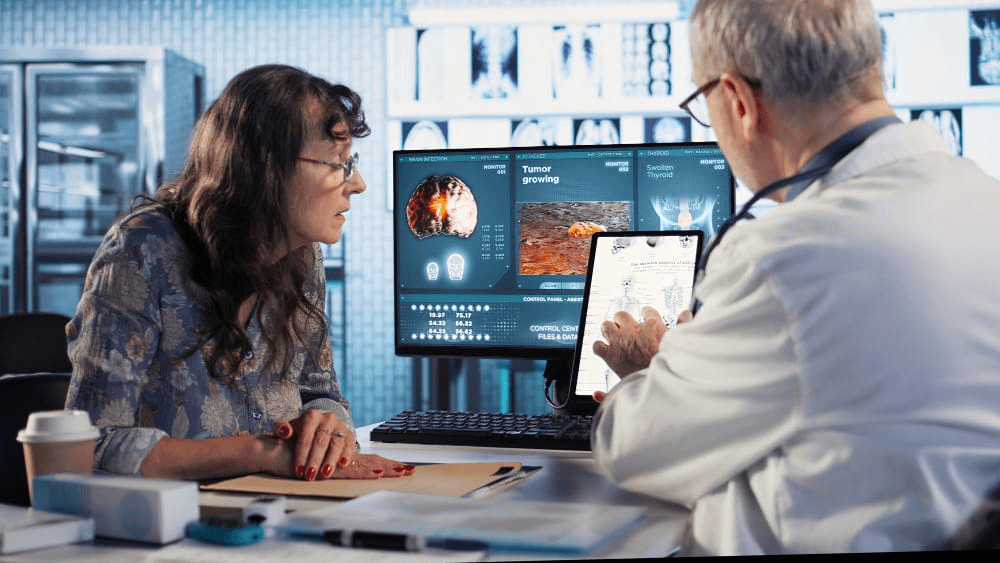
Medical animations can also be used to demonstrate ideas that would take a lot of consulting time for healthcare professionals. Three-dimensional models of the brain can show areas that might be involved in emotional regulation, memory, attention and decision-making, and help patients understand why psychological disorders have an impact on daily functioning like sleeping, focusing attention, working and relationships.
Enhancing Patient Education and Health Literacy
Treatment outcomes are very much related to health literacy. Knowing about the condition will help patients to follow treatment recommendations, attend therapy sessions and be committed to taking prescribed medications. Unfortunately, many people have trouble understanding written information about mental health education, which uses jargon.
Animation is one way of doing this, synthesizing narration, illustrations, movement and story into one learning experience. The combination of visual and auditory information has proven to be the most effective way to foster learning and retention. Instead of learning scientific terms, patients watch processes that happen in biology and they use to remember it even if they had to go from the clinic.
An animated description of OCD can demonstrate, for instance, how the intrusive thoughts repeatedly trigger some neural pathways, which in turn result in compulsive behaviors that temporarily alleviate anxiety. Patients don’t see compulsions as unreasonable behaviors, but as signs of a problem in the brain. This knowledge can help increase the acceptance of treatment and help increase participation in treatment.
Animation is also useful for children and adolescents who may be unable to grasp concepts of psychology in their education. Familiar and familiarized characters and scenarios are used to provide an engaging learning environment which minimizes fear and encourages open discussion around mental health.
How to minimize fear, anxiety and self-blame
A diagnosis of depression, anxiety disorder, bipolar disorder and schizophrenia can be a very emotional experience. Most patients first think that their symptoms are a failure to cope with life or are a sign of their own weakness. A lot of these misunderstandings can be the reason for a delay in seeking medical treatment and add to the stigma of mental illness.
Medical animation in mental health works to dispel such myths and replace it with science. For example, an animation of a panic attack can show how the brain sends false alerts to the body to prepare for some type of threat even though there is no real threat at all. Adrenaline is released, the heart rate rises, breathing quickens and muscles become ready to move while patients observe all of this. Knowing about these biological processes can help to alleviate the fear that patients have that they are losing control when they experience a panic attack, making it feel more like a normal biological response.
Likewise, animations that describe depression can depict alterations in brain function in the regions responsible for motivation, reward, and emotion. Patients start to appreciate why normal activities like going to work or bed, and socializing is so hard. This approach to a biological perspective can mitigate feelings of guilt and self-blame and provides patients a place to look for professional support.
Helps with Therapy and Long-Term Treatment
Medical animation is not only helpful in the diagnosis and education of patients but is also great help for therapeutic interventions. CBT is a therapeutic approach that is widely used to treat depression and anxiety, and involves a focus on the interactions between thoughts, feelings, physical sensations and behaviors. Although this idea is at the heart of therapy, at first, patients may be unable to make sense of how these elements impact each other.
An animated teaching material can show how when people are stressed out, they may have automatic negative thoughts which cause them emotional distress, physical symptoms like muscle tension, or rapid heart beat, and behavioral responses like avoidance or withdrawal. Patients can then visualize this cycle and see how they can identify similar patterns in their own lives and how changing negative thought patterns can have a positive impact on their emotional health. Additionally, the program aims to educate and inform families and caregivers about mental illness.
Medical animation is beneficial for more than just patients. Family members and caregivers are also emotional and instrumental supporters of a loved one, but they can get frustrated with their loved one’s behavior after the individual develops a psychological disorder if they do not understand this behavior. Depression, bipolar disorder, schizophrenia or obsessive-compulsive disorder may change someone’s mood, energy, decision making process and sociability in ways that can’t be communicated clearly in words. If the family is not aware of these changes, they might think that the person is being lazy, uncooperative or lazy with trying.
Medical animation can help fill this gap in knowledge by using a visual description to explain what is going on in the brain. Depression can be shown not just in terms of loss of motivation, but also by the reduction in activity in certain neural pathways involved in reward and emotional regulation. Similarly, schizophrenia animations can explain the role of dopamine dysfunction in the development of schizophrenia symptoms, such as delusions and hallucinations, to show that the symptoms are not a user’s manipulation.
As the public gains more knowledge, misconceptions about psychological disorders slowly give way, and people are more willing to obtain treatment without worrying about discrimination.
AI in Mental Health Market
As medical animation in mental health becomes a vital tool in mental health, there is also a surge in the use of AI in the healthcare sector, greatly influencing patient education and treatment. The integration of medical animation into mental health care is also closely linked to the rapid growth of AI technology in healthcare, which is significantly impacting patient education and treatment.
I stumbled upon a Roots Analysis report that covered the latest in the field of AI in mental health, which gave me a great deal of insight into mental health and how technology is changing the landscape of mental wellness. While I have grown more aware of the role that AI plays in supporting clinicians with diagnosis and/or treatment planning, reading the report helped me realize that AI can be more than that. It is now being applied in intelligent chatbots, virtual mental health assistants, customized treatment programs, predictive analytics, symptom evaluation and measurement tools, and AI-generated educational materials such as medical animations that explain complex psychological conditions to patients.
The global AI in mental health market size was valued at USD 1.23 billion in 2024, and by 2025, it is expected to cross the USD 1.81 billion mark, growing at a compound annual growth rate (CAGR) of 31.4% during the forecast period, according to the report. The numbers reflect a growing focus on investing in digital mental health technologies designed to increase accessibility, tailor interventions, and increase patient engagement. A future for animation in mental health care.
The possibilities of medical animation are not limited to educational videos. These new technologies are creating immersive learning experiences that are interactive with patients. Patients will not just be able to view a video but will have the opportunity to engage with interactive 3-D brains.
AI is also helping to create more adaptable animations. Going forward, a patient’s diagnosis and treatment history and learning styles could be used to create customized education programs as they are needed. Animations, for instance, can be used in patients newly diagnosed with generalized anxiety disorder to explain the biological underpinning of anxiety, and in patients starting antidepressant treatment, can be used to help visualize the gradual effects that the medication has on neurotransmitter activity over a period of weeks.
The famous quotation “People learn better from words and pictures than from words alone” is attributed to Professor Richard E. Mayer, Ph.D., an educational psychologist who has contributed extensively to the field of learning from multimedia texts and has found a significant impact in the design of many educational fields. This is an ideal reflection of the worth of medical animation as a communication tool in mental healthcare. The animation helps to convey the science and information and make the patients active players in their treatment.
Conclusion
Psychological disorders, of course, are often referred to as “invisible illnesses” because its symptoms are not observed as physical injuries. But the obstacles that they pose are tangible, challenging, and personal. Medical animation is also contributing to the communication of scientific information to the patient, by creating clear story lines of complex neurological processes. From helping to depict brain activity to explaining therapeutic techniques, to showing how the brain works to helping family members understand mental illness, animation brings complex concepts to life and makes them much less frightening.
The future of digital healthcare is bright, with the potential of even more significant progress in the field of mental health education through the incorporation of interactive technologies, medical animation, and artificial intelligence. Patients will receive customized, immersive learning experiences that will help them to better understand their diagnoses, and to confidently engage in treatment decisions, communicate more effectively with their healthcare providers and loved ones.
As mental health awareness grows rapidly and awareness of its significance is greater than ever, animation is already seen to be more than a communication tool, but a tool for empathy, education, and better patient outcomes. It is making invisible visible and is also contributing to changing the worldwide perception, treatment and discussion of psychological disorders.
References
- Baptiste, Y. M., & Abramovich, S. (2024). Community college student perceptions of digital anatomy models as a curricular resource. Anatomical Sciences Education, 17(7), 1731-1748.
- Roots Analysis. (2025). Global Medical Animation Market Size & Industry Report, 2035.
- Silén, C., Karlgren, K., Hjelmqvist, H., Meister, B., Zeberg, H., & Pettersson, A. (2022). Three-dimensional visualisation of authentic cases in anatomy learning – An educational design study. BMC Medical Education, 22(1), 1-11.
About the Author
Avantika Sharma is a content writer and healthcare/biotech enthusiast. She is an expert at making complex scientific concepts accessible, engaging and well-researched for a broad audience. She reads fiction avidly and writes non-fiction with passion. Her curiosity, combined with painstaking research, produces informative and accessible articles that bridge the gap between science and everyday understanding. LinkedIn: https://www.linkedin.com/in/avantika-sharma-088283334/