

Introduction
In-person consultations, limited clinical resources, and the ability of the patient to seek help promptly have always been requirements of mental healthcare. Advances in digital wellness technology have enabled mental health education to be brought directly to mobile phone users, along with self-service tools, symptom tracking platforms, meditation, and professional support.
According to DataIntelo, the valuation of the global mental health applications market in 2025 stood at around $3.8 billion and is projected to grow to $14.2 billion in 2034, demonstrating a strong growth rate of 15.8%. This trend can be attributed to the rising awareness related to mental well-being, increasing penetration of smartphones, establishment of wellness programs in workplaces, remote care, and the adoption of artificial intelligence technology.
The significance of mental health applications does not end with their growing popularity. The platforms are making it easier for users to take control of their feelings, adopt healthier behaviors, and find help that otherwise would not be so accessible.
Improving Access to Mental Health Services
Access to mental health services is difficult for many individuals. Even though mobile applications are useful tools to introduce oneself to mental health services,
there is no way for one to use them as a substitute for real experts on this matter. There are various reasons why access to mental health services is not easily available, such as resource limitations, distance, waiting periods, stigma, and lack of specialists. In some countries, like developing ones, there are few specialists in this area.
Mental health apps can provide services to some extent, but they are not and should not be used as substitutes for professionals.
The great thing about this potential is that it can be of great help to those who live in the countryside, work at odd hours, take care of relatives, or those who like being helped without any outside interference. They make it possible to access information on mental health in a more easily digestible and quicker manner instead of waiting for an appointment with an expert.
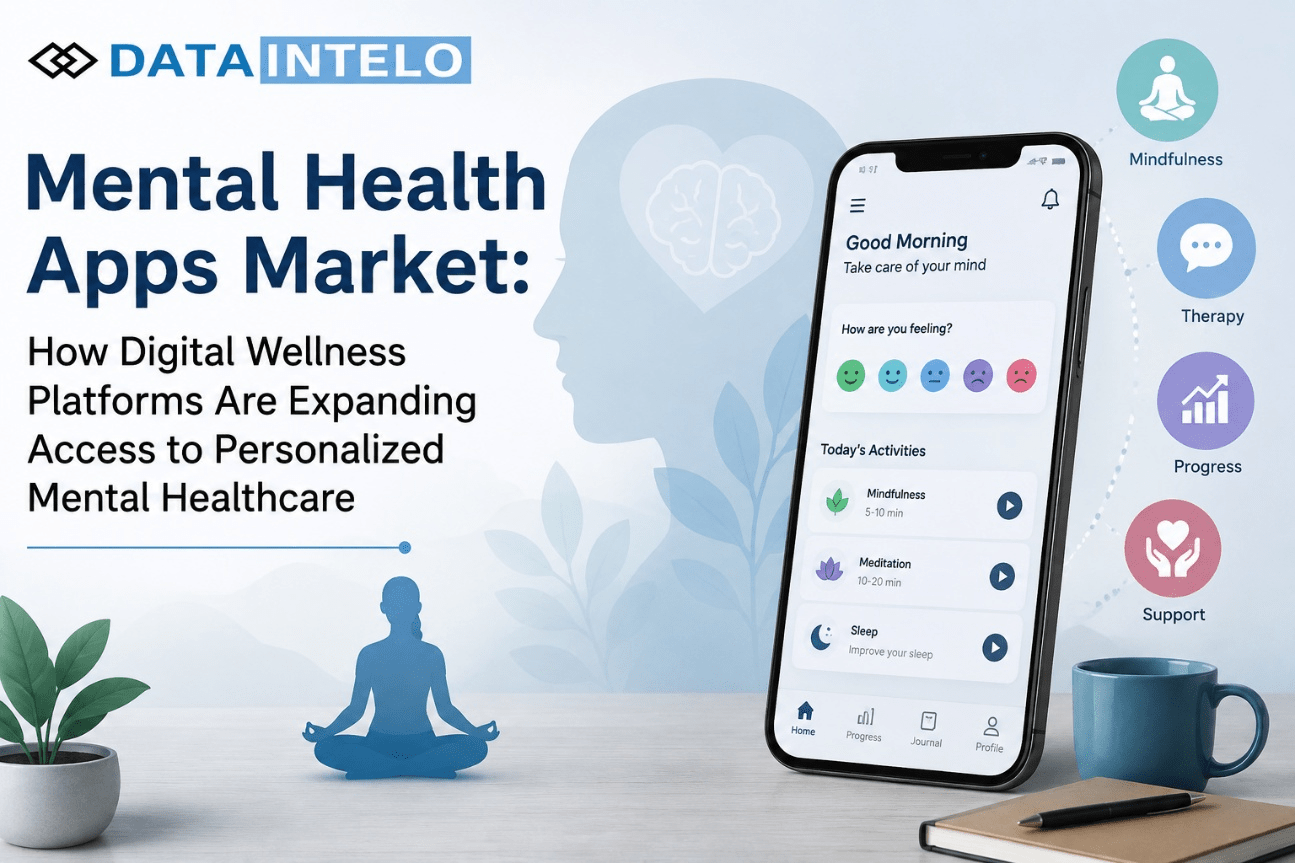
The market offers a wide range of different platforms, including meditation and mindfulness apps, CBT solutions, teletherapy services, mood-tracking systems, sleep-management apps, and artificial intelligence-based emotional support systems.
Personalization Is Reshaping Digital Wellness
In the early days of mental health apps, users had access only to predefined sets of meditative audios, articles, and relaxation activities. Nowadays, newer apps have more adaptive approaches. They collect data from such sources as user mood records, sleep records, preferences, engagement patterns, and goals of their job.
For instance, if a user reports stressfulness and lack of sleep, he or she will get training in sleep management, relaxation techniques, and evening reminders. In case another user feels demotivated, he or she will be tasked with short behavioral activities or will be asked to meet a specialist.
The advent of artificial intelligence in technology is significant; it contributes to the development of platforms by making it possible to study trends and generate more relevant forms of interaction. For instance, conversational interfaces are capable of responding to straightforward queries instantaneously, while predictive technologies can distinguish variations of an individual’s mood, behavior, or sleep that may indicate an increased need for assistance.
Moreover, research has shown that digital meditation techniques can be enhanced through personalization, as functions used for psychological counseling or mental health care rarely account for the personality of the individual. Therefore, some people will favor long meditation sessions, while others might want to engage in two-minute sessions.
Personalization, however, needs to be done wisely. A recommendation engine must not make unfounded diagnoses or create the false impression that a mobile application can control clinical mental health issues independently. Appropriate limits, clinical supervision, openness in data practices, and proper referrals are vital.
The Importance of Positive Psychology
Before now, mental health practitioners have been concerned about helping patients overcome their psychological problems such as anxiety, depression, stress, and sleep disorders. One important factor of mental health is, however, one’s character strengths, relationships, values, and confidence in the process of achieving meaning in their life.
It is here that positive psychology could be of help. The theory of positive psychology is not about ensuring that people do not encounter difficulties, nor does it insist that everyone must always think positively.
Many of these ideas can be understood through the PERMA model:
| PERMA element | Possible digital wellness application |
| Positive emotion | Gratitude practices, savoring practices, calming soundtracks, and emotion recognition |
| Engagement | Mindfulness practices, focus practices, habit development programs, and interactive learning |
| Relationships | Peer-support groups, communication practices, and connection reminders with reliable individuals |
| Meaning | Meaning Values practices, purpose discovery, and goal setting |
| Accomplishment | Progress tracking, small behavioral goals, and recognition of completed activities |
There is a way to incorporate the PERMA model seamlessly into mental health applications without the user feeling that he is in some sort of a psychological lecture. For example, the journaling function can prompt the user to note an important moment. With the help of a goal-setting instrument, a person will be able to identify a small and feasible action. Similarly, the social networking feature can remind them that good relationships are also an essential component of well-being.
In terms of the progress related to the facts about digital positive psychology intervention, it can be noted that a systematic review covering 35 studies with children, adolescents, and young people has shown that such methods are effective in terms of enhancing the level of purpose in life, feelings of gratitude, hope, compassion, and thereby reducing the level of negative feelings and stress.
This indicates that online mental wellness programs may serve two interconnected purposes: assisting individuals in dealing with emotional challenges and bolstering the positive factors that ensure that the process of recovery and the state of well-being will be sustainable in the future.
Key Applications that Push Adoption
Meditation and mindfulness apps
One of the key areas of the application industry is still occupied by meditation and mindfulness. According to DataIntelo estimates, meditation and mindfulness comprised 32.5% of the overall market in 2025.
Key capabilities of the applications include provision of guided meditations, breathing activities, body scanning, bedtime stories, and quick stress relief sessions. They are also known for attracting a broad audience due to their low entry threshold, since no medical referral is needed to commence short mindfulness practice.
The use of mindfulness tools may play a role in the achievement of a positive psychology objective, which may involve the facets of being present, being aware of experiences and feelings, and being grateful and kind to oneself. However, such tools must not be seen as the way of implementing a one-size-fits-all solution for dealing with different mental disorders.
Depression and anxiety management
The main components that can be found in depression and anxiety applications are cognitive behavioral exercises, mood tracking, psychoeducation, behavior activation, and connection with certified mental health practitioners. Some developers combine self-help techniques with counseling through written, audio, or visual media.
The line between wellness applications and rigorously structured digital treatment options is gradually blurring now that providers as well as insurers are evaluating different technologies according to their efficiency, safety rate, level of interest, and other features.
Sleep management
The relationship that exists between sleep and mental well-being is very important. Lack of sleep can bring about instability, inability to concentrate, stress, and depression while depression and anxiety might cause insomnia problems.
Most sleep apps consist of relaxation materials, sleep logs, purring tracks, sleeping habits, and user instructions. Additionally, with the help of certain devices, apps can consider parameters like sleep duration, movements, and heartbeat.
Stress and resilience-building
Applications for managing stress are focused on assisting individuals in coping with work-related stress, academic stress, caregiving stress, financial stress, and other life-changing events. Some of the most popular functions used in such applications include breathing techniques, guided relaxation, journaling, emotional check-ins, and educational materials.
Among the new platforms, there are some that not only provide stress relief but also teach resilience. This may involve activities about self-compassion, optimism, recognizing various personal strengths, coping, and goal-setting skills.
From Self-Help to Connected Care
Mental health applications are now moving from being standalone items to being linked with wider healthcare services. Health practitioners may suggest an app during therapy sessions, involve symptom-based data in the process of measurement-based treatment, or keep track of aspects such as whether a patient completed a particular online program.
Using electronic health records can help speed up this process since, when utilized in the right way, a mental health platform can provide the needed info on fluctuations in feelings, sleep, adherence to treatment, or outcomes from the point of view of patients.
Remote care signifies one other aspect of this growth. A user can start with an app that is useful for screening, continue with a self-guided program, and eventually get in touch with a counselor or a doctor in case of need for support. In other words, a stepped-care approach is adopted as far as the approach that the individual requires is concerned.
Employers also use mental wellness platforms as part of larger employment benefits. Corporate services can include meditation collections, counseling services, stress management programs, manager training, and confidential support for employees.
Market Segmentation and Regional Trends
There are many different ways to cluster the market for mental health applications – by the platform (iOS, Android, and Windows), by the application (for example, to manage anxiety and depression, to relieve stress, to meditate, etc.) and so on.
| Market segment | Key categories |
| Platform | iOS, Android, and Windows |
| Application | Depression and anxiety management, stress management, meditation and mindfulness, sleep management, and other uses |
| Age group | Teenagers, adults, and elderly users |
| Subscription model | Free, freemium, and paid |
| End user | Individuals, organizations, and health care service providers |
| Region | Asia Pacific, North America, Europe, Latin America, and Middle East & Africa |
Asia Pacific constituted 38.2% share of the revenue of the global market in 2025, as per DataIntelo. The growth of the Asia Pacific is due to the large population of the region, high use of smartphones, increasing consciousness of mental health, and weaknesses in traditional mental health care facilities.
Opportunity in Asia Pacific is not merely about developing the app in another language. The platforms have to take into account the cultural approach toward therapy, family setups in the region, preferred payment methods, and varied health literacy.
The North American region has experienced benefits from having telehealth facilities in place, having adopted corporate wellness, and showing interest in the development of digital therapeutics. The European market is driven by regulation of digital health, data privacy laws, and the country’s national healthcare system. The developing markets in Latin America, the Middle East, and Africa may grow due to increasing mobile connectivity and digital health investments.
Privacy, Safety, and Trust
The apps for mental health possess some of the most private personal information that a user shares. Records about moods, therapy, sleep, crises, and behaviors can reveal personal details about an individual’s life.
In light of this, privacy should be considered an essential aspect of the product feature rather than something to add as an afterthought. Users have the right to know:
- What kind of information is being collected by the application.
- Why the information is collected.
- If there is any sharing of information with external entities.
- The period of time for which information is retained.
- The possibility of deletion of their profiles.
- How the information from the artificial intelligence system is used.
- What happens in case the platform detects any potential threat.
Privacy and security requirements may differ based on the type of the app, its location, model of business, and relationship with healthcare institutions. The app that is created for meditation would be governed by different rules than the application that offers digital therapeutics or maintains medical records.
Safety aspects are equally significant. It should be clear that the application does not provide emergency services and that users who report self-harm or suicidal threats should be referred to proper assistance services.
Challenges Facing the Market
The fast-growing popularity of the market brings up questions concerning the quality and responsibility of app creators. There are many apps for mental health and wellness, but they can differ in terms of evidence, clinicians’ involvement, privacy policies, and user-friendliness. Here are several problems that should be solved:
Differentiation between evidence-based interventions and fake ones.
- Safeguarding sensitive data against misuse and breaches.
- Evading over-reliance on artificial intelligence for clinical decision-making.
- Making the service accessible to those who don’t have insurance or company benefits.
- Developing an interface that would be usable across languages, cultures, age groups, and disabilities.
The Future of Digital Mental Healthcare
This next generation of the mental health apps industry will probably require greater collaboration among technology firms, therapists, employers, insurers, researchers, and the public health sector.
AI can contribute to creating more adaptive content, but clinical governance will still be needed. Wearables could help with more consistent monitoring, yet people should have control over how their data is collected and analyzed. Digital platforms can be more accessible to a wider audience; however, accessibility would be only partial without affordability, cultural relevance, and localization of services.
Those digital platforms that will be most effective might be those that combine user convenience and responsibility. They will give individualized assistance without making exaggerated claims, foster positive psychological resources without underplaying suffering, and connect users with human practitioners when necessary.
It might seem straightforward to include a short exercise in appreciation, a reminder to reach out to a friend, or a goal that can assist a person in regaining feelings of accomplishment. However, such aspects reveal a more comprehensive approach to mental health care that focuses not only on symptoms but also on interpersonal relations, meaning, engagement, and environmental conditions that make well-being possible.
As digital mental wellness platforms keep growing in number, their value will not be based on the number of their features anymore but on whether they allow people to receive proper care, develop appropriate coping mechanisms, and take an active part in the process of improving their mental well-being.
Note: While mental health applications can provide users with useful information and helpful resources, they cannot substitute for professional evaluation or urgent assistance. People experiencing significant distress or an imminent threat should seek help from a qualified specialist or an emergency unit.
Reference: https://dataintelo.com/report/mental-health-apps-market